

Buying · 6 min read
Two correct documents can still disagree
A quotation, a purchase order and a drawing can each be right and still describe three different jobs. The written confirmation is where the differences surface.
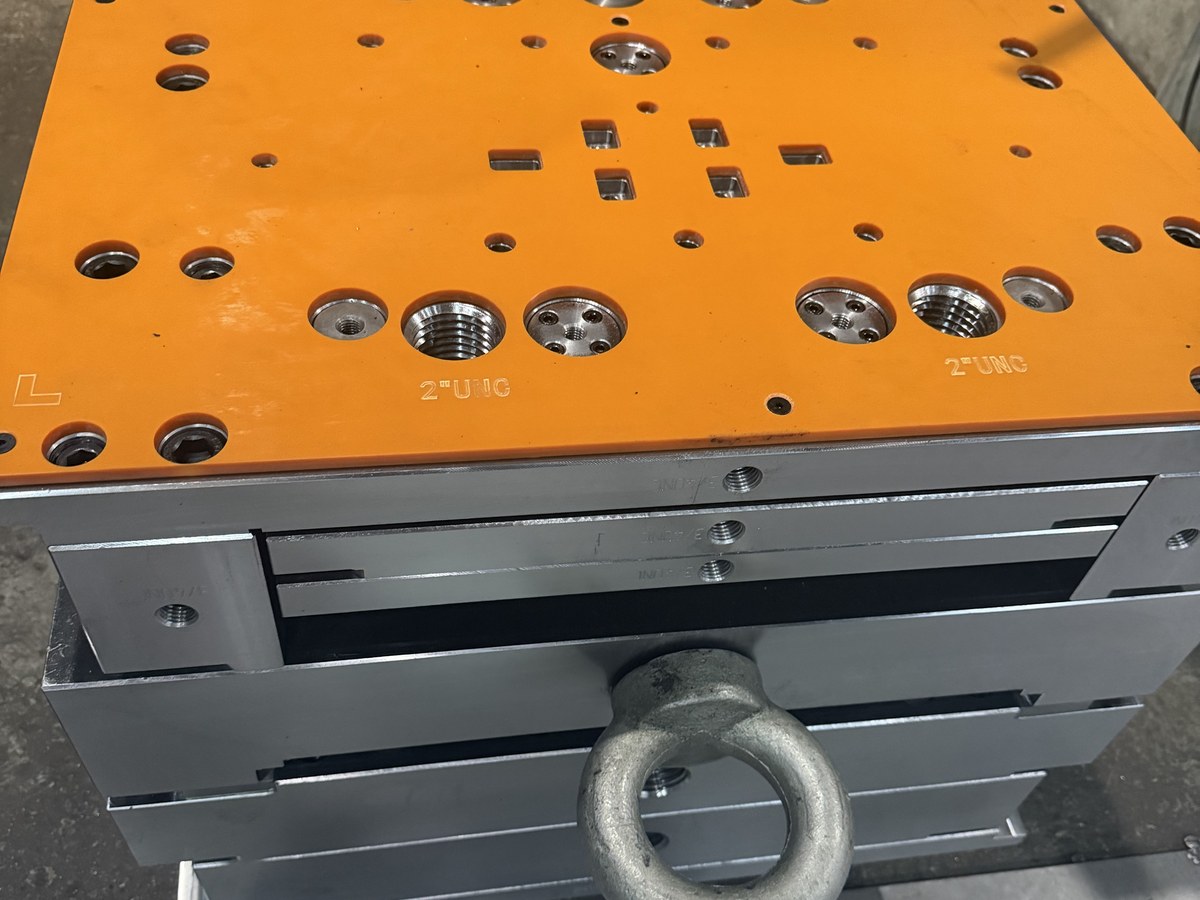
An order for a mold base produces four documents before anything is cut: the enquiry, the quotation, the purchase order and the drawing. Each can be correct and still describe a different job. The quotation prices a plate list that has since been revised; the order says "one mold base" where the quote said plates plus a fitted guide set; the PDF attached to the email is Rev B while the order references Rev C. The fifth document is the one the supplier writes back: the only evidence of what the shop believes it agreed to make, and the cheapest place to find a disagreement — before the deposit is paid.
"We can make it" is not a confirmation. A one-line reply answers availability, not scope. A proforma invoice repeats price, payment and a date, but not which plates are in the stack, which features are fits, or which revision is being cut. A confirmation is written in the supplier's own words, so a wrong restatement is wrong on paper, where it costs an afternoon to fix. An assumption kept in somebody's head is discovered after the plate is machined. Ask for it as a named document, in the language your team will read later.
Start with the revision letter. The order names Rev C, the attached file is Rev B and the plate list carries no letter at all; all three are internally consistent, so nobody notices. The confirmation should name the drawing number and the exact revision it was written against, and every document that follows — plate list, inspection record, packing list, crate label — should carry that same letter. Drawing revisions and change orders covers the rest: a later change is a dated revision, not an argument about which drawing was current.
Then the plate list, line by line. "P20 mold base" is not a plate list. A two-plate base is already five or six pieces, each with its own grade and finished thickness; the grade on a backing plate is not the grade on a cavity plate. The confirmation should enumerate the plates with grade and finished thickness on each line, or attach the priced plate list by name. Standard size or your own plate list explains the split. If the list changed since the quote, that is a new price — better to learn it now.
Scope is next, and "mold base" does not settle it. The same drawing can be bought as plates only, as plates with guide bores ready for your own bushes, or as an assembled set with pillars, screws, dowels and lifting hardware. What a mold base order contains lists the choices. A quote that included a fitted guide set and an order that says "plates" are two different purchases. The confirmation should say where supply stops. Spare parts are the same question a year later: the record a first order leaves is what makes a replacement possible.
Quantity needs the same treatment when several bases come off one drawing. Six bases are six matched sets, each with its own number on every plate; a confirmation that merely says "six" leaves open whether plates interchange across sets, which they do not. Ask for the numbering convention in writing, and for the plate and set numbers on the plate edge rather than only on a paper tag that can be lost in transit.
Fitting features belong in the confirmation because they decide what gets measured. On fitting and ground faces we hold ±0.02 mm and grind to Ra 0.8 µm; on dimensions that are not a fit the general convention is 0.3 mm. Those are our own shop callouts, not a claim of compliance with an external standard. The confirmation should name the fit features and their datum, so the inspection record that travels with the shipment measures what the drawing calls out. Two correct numbers from different datums will disagree at your incoming inspection.
Delivery terms are easy to leave implicit. A term without a named place is incomplete, and the consignee should be the party that can actually receive and inspect the crate. Settle both in the confirmation, not in an email the week the case is built: changing either late touches the invoice, packing list and shipping marks at once. If a toolmaker receives the crate on your behalf, say so there.
Payment and the clock are the lines buyers already watch. Our terms are 50% deposit and 50% before shipment, with no credit terms for a new customer, and the four dates in an order explain the split. The confirmation should state what starts the clock — an approved revision and the deposit — and what releases the balance. "Before shipment" is a milestone, not a date; ask which documents arrive with it, so the inspection record and packing list are in hand when you pay.
Give the confirmation one owner on each side. A drawing question answered in a chat thread, a grade changed on a call and a revision sent as a photograph produce a job nobody can reconstruct. Name one approver, one channel and a reply window; anything changing afterwards is a written revision with a date and a new letter. The same rule applies when a measured value falls outside its callout — the decision belongs in a signed document, not a message.
Distance makes this a document problem. Our shop is in Dongguan, China, and a buyer sourcing from China cannot walk onto the floor to settle an ambiguity. When a base is shipped from China, a written English confirmation is the one artefact both sides can re-read later, including the toolmaker who receives the crate and was never on the enquiry. That is one practical part of what buying a mold base from China actually involves. Chinese mold base suppliers who restate an order in writing are easier to audit; the Chinese side of a supply chain is easier to hold to a revision letter than to a memory of a call. Not trust — two time zones and one plate already cut.
Eight lines to check before the deposit leaves.
1. Drawing number and revision letter.
2. Plate list with grade and finished thickness per plate.
3. Scope: plates, bores, fitted guide set, hardware, lifting points.
4. Quantity and how each set is numbered.
5. Fit features, their callouts and the datum.
6. Delivery term with a named place, and the consignee.
7. Payment split and what releases the balance.
8. The date the lead time starts and the crate is due. What to send with an RFQ covers the enquiry; this is what should come back.
An unagreed detail is not a saving; it is a question answered later, when the plate is already cut. Read the confirmation against the drawing and correct it before the deposit. The same applies whether you order a standard plastic mold base, an injection mold base, a precision ground base or a custom non-standard base. Ordinary mold bases from our Dongguan mold base lines usually ship in 7–10 days; capacity is 2,000+ sets and pieces per month; and you deal directly with the factory that cut the plates.
Related