

Commercial · 6 min read
Out of tolerance on a mold base from China: who decides what happens next
A dimension reads outside its callout and the drawing has not moved. Three remedies are possible, and the rule for choosing between them belongs on the order before anyone cuts steel.
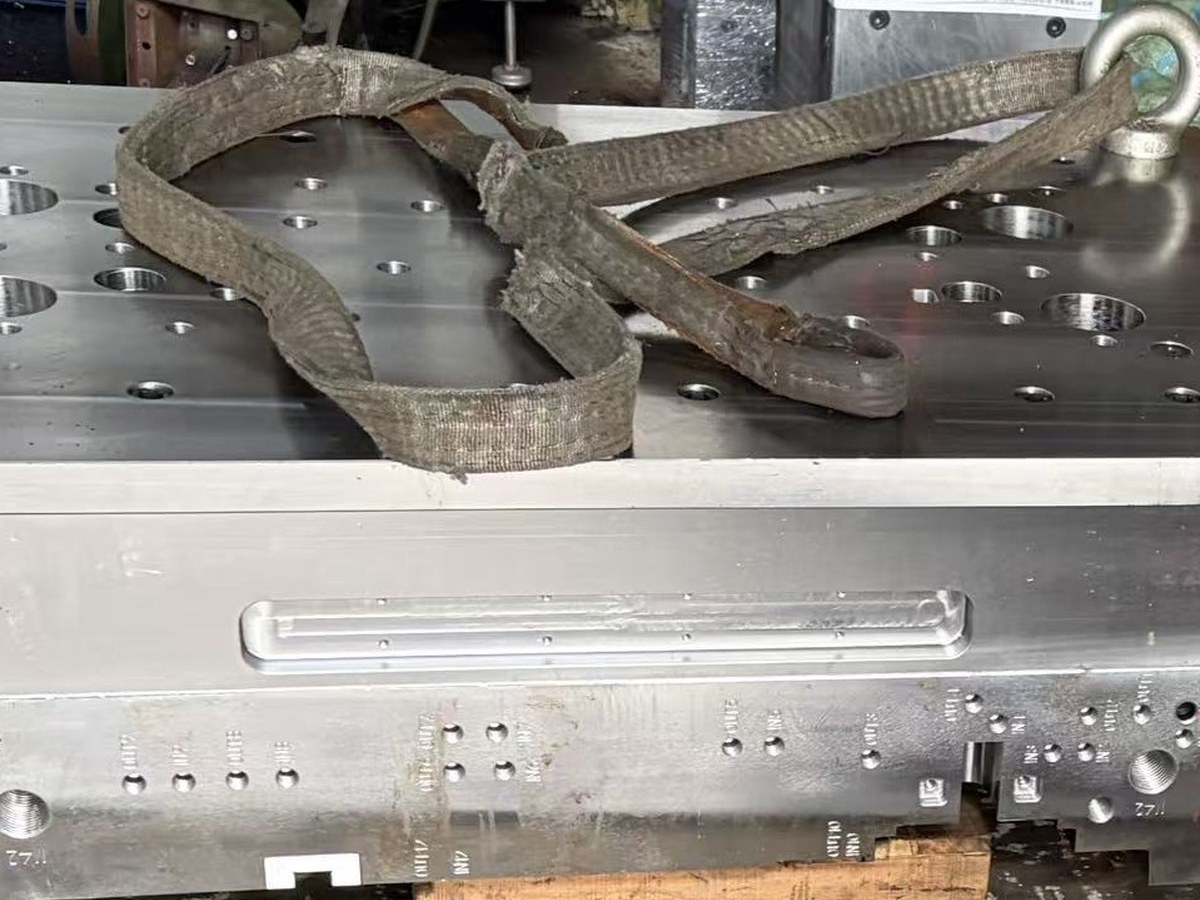
An inspection sheet comes back with one line out of band: a bore on a finished plate reads outside its callout, every other feature is inside, and the drawing has not changed. Three things can happen next: rework the feature, accept it under a written concession, or make the plate again. Each carries a different cost, date and consequence downstream. On most orders the rule is written after the measurement, by email. That is the wrong order. This is not a change order — nothing on the drawing moved — but a disposition decision, and it belongs in the purchase order before the plate is cut.
“Out of tolerance” describes one reading, not one problem. Sort it into four cases first. The measurement may be in question: datum, face, temperature or how the plate was held. The feature may sit in a free area with no functional effect, be fit-critical with stock left to remove, or have too much material already gone. An order saying only “all features to drawing” treats all four alike — an argument in three cases, an unnecessary new plate in the fourth.
Rework is a direction, not a promise. Metal can be taken off; it cannot be put back. A small bore can be opened and a face with stock left can be ground, but a pocket cut too deep or a hole broken through a web has no repair that restores the drawing. Revisions and change orders makes the same point; here the test is simply which side of the callout the plate sits on. Ask for that in writing before agreeing to “rework”, and which datum the re-cut will use — as clamping datum and flatness explains, a returned plate cannot be re-cut from a reference face already machined away.
A concession is a design decision, and the shop cannot make it. Only the party that owns how the tool functions can say a dimension outside its callout will still work. A supplier proposing “accept as-is” is asking a question, not granting a waiver. A usable concession names the feature and set number, records the measured value with its datum, states why function is unaffected, names the approver, and says whether mating parts will be made to the drawing or the as-built size. Without those lines the deviation is merely unmentioned, and it reappears at assembly after the insert has been cut to nominal.
A remake resets a date as well as a cost. A new plate goes to the front of the queue, not the inspection bench. Four dates in a mold base order puts measurement and release on separate lines; an unresolved disposition lives in the gap, with the plate finished, the shipment held and a press date booked. The order should say who triggers a remake, on whose written instruction, and from which date the new delivery clock starts — a commercial line, not an admission of fault.
Name one person who may decide. When a deviation is discussed with three people on the buyer's side and executed by a fourth, nobody owns the result. A disposition clause needs one named approver, one channel and an agreed response window, so the plate does not sit on a bench while the decision travels. The shop reports the measured value, proposes the remedies that are technically possible and states what each does to the delivery date. The buyer chooses. Sales staff cannot concede a drawing on the buyer's behalf; nor can a toolmaker who does not own it.
The evidence has to be good enough to decide on. A pass/fail tick is not a disposition; it is a decision already taken by somebody else. Ask for measured values, not a verdict, with datum, measured face, plate condition and drawing revision beside each number — what an inspection record proves sets out why the number and its context travel together. If a concession is granted, the record must say accepted with a listed deviation, not pass, and the as-built values must travel with the shipment. Those are the numbers a replacement bush will be made to years later.
Seven lines settle most of it. Put them in the order, not a later email:
1. The controlling document: drawing number, revision letter, freeze date.
2. The fit-critical features whose callouts are not negotiable.
3. The acceptance evidence: measured values, datum, face and condition per feature.
4. The named person who may accept a concession in writing.
5. What happens to the record and as-built values when one is granted.
6. Who triggers a remake, and which date the replacement is quoted from.
7. Where the decision is logged, so a repeat order does not reopen it.
Ask for the rule in the quotation reply. A quote that lists the features to be inspected but says nothing about an out-of-band result has left the largest commercial variable unstated. Reading a mold base quotation covers what a price is tied to; add two questions: which features will be reported with measured values, and what remedy is proposed if one reads outside its callout. A supplier who answers both is describing a process. One who answers only “we will meet the drawing” is leaving the exception undecided.
For buyers sourcing a mold base from China, the clause does more work. A toolmaker down the road can settle a borderline bore at the machine; a buyer working with Chinese mold base suppliers from another time zone has only the instruction that travelled with the order. Distance does not change the geometry, but it raises the cost of one undecided plate: idle steel, a round of email, a freight decision nobody wanted. Our shop in Dongguan, China works to the same rule: drawing, revision and disposition clause travel as one package, so an out-of-band reading is a same-day decision. That is one practical part of what buying a mold base from China actually involves: the people who cut the plate and the people who own the tool are not in the same room.
The deviation itself is not the failure. Plates are measured so a real number can be discussed. The failure is an undecided deviation: a plate neither accepted nor remade while the delivery date moves. Our own callout for fitting and ground faces is ±0.02 mm, with ground faces at Ra 0.8 µm; both are our figures, not a claim of compliance with a general standard, and non-fitting features sit inside a general 0.3 mm band. Which band a feature belongs in decides whether a reading is a disposition at all. Ordinary mold bases from our Dongguan, China mold base lines usually ship in 7–10 days; capacity is 2,000+ sets and pieces per month; and you deal directly with the factory that measured the plate. If some features must never be conceded, say so when you send the drawing — start with our custom non-standard mold base line or the precision ground mold base line.
Related